Movie
Whalefall
Narrative tropes
A Parent's Shadow
highJay's entire arc is defined by his relationship with his dead father Mitt. Inherited guilt and a strained relationship drive the central conflict; the father's disembodied voice inside the whale forces direct reckoning with that legacy. Mitt's lessons (inherited responsibility) literally enable Jay's escape. The resolution is a reconciliation that lets Jay redefine the relationship on his own terms rather than remaining haunted by it.
About this trope: A character must grapple with the legacy of their parents or predecessors — living up to high standards, running from expectations, atoning for inherited sins, or forging their own path.
Humans Never Give Up
highBeing swallowed alive with roughly one hour of oxygen is objectively hopeless; surrendering would be rational. Jay nonetheless navigates the stomach by improvised light, attempts to cut through stomach wall with a squid beak, and ultimately fabricates an explosive from dive equipment. Survival against impossible odds is the literal central plot, and the emotional climax is the sustained decision to keep trying rather than the moment of rescue.
About this trope: Facing impossible odds, humans endure, adapt, and find reasons to keep going. Resilience and refusal to surrender is humanity's defining and most admirable trait.
Cultural messages
Forgiveness Sets You Free
mediumJay is explicitly haunted by unresolved guilt from a strained father-son relationship — a grudge/wound causing ongoing suffering. Inside the whale he confronts and works through that grief, and the film frames this as father-son reconciliation. The act of releasing the burden is presented as both psychologically liberating and causally linked to his physical escape, framing forgiveness as the path to freedom.
About this message: Forgiving — even the unforgivable — is presented as the path to peace and healing. Holding grudges is self-imprisonment; releasing them is liberation.
Family Is Everything
mediumFamily bonds are the mechanism of resolution: Jay dives specifically to recover his father's remains (choosing family over safety), the father's survival lessons are explicitly described as 'the key to his escape,' and the emotional climax is a psychological reconciliation with the father. Family bonds — not equipment or luck — defeat the threat when nothing else can.
About this message: Family bonds — biological or found — are ultimately what saves the day, provides meaning, and matters most. Characters who stray from family suffer; those who return are rewarded.
Movies that share these tropes






Full plot (spoilers)
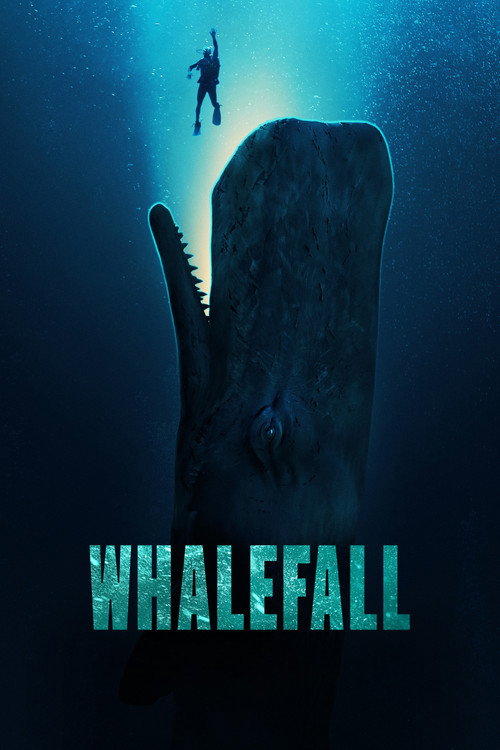
Jay Gardiner, a young man on California's Central Coast, is reeling from the recent death of his father Mitt — a professional scuba diver who died by suicide, weighting himself with diving gear and going overboard near Monterey. Haunted by their strained relationship, Jay undertakes a solo dive at Monastery Beach to recover his father's remains. During the dive he witnesses a giant squid being attacked by a massive sperm whale; his gear becomes entangled in the struggle, and he is swallowed by the whale. With only roughly one hour of oxygen remaining, Jay must find a way out of the whale's digestive system. Inside, he navigates the whale's stomach using bioluminescent jellyfish for faint light, crawls deeper into the digestive tract, and uses a squid beak he finds to attempt to cut through the stomach wall. Throughout the ordeal he hears what seems to be the disembodied voice of his father emanating from within the whale, forcing Jay to confront his grief and the unresolved guilt between them. The hard-earned survival lessons Mitt instilled in Jay over their difficult years together gradually prove to be the key to his escape. Jay ultimately fashions an improvised explosive using steel wool and batteries from his dive equipment, detonating it inside the whale's stomach to blast his way out, and is rescued from the ocean. The film draws on the biblical Jonah story and the Pinocchio-and-Monstro sequence, framing the whale's belly as both a literal death trap and a space of psychological reckoning and father-son reconciliation. Note: the film had not yet been theatrically released as of the time of research; plot details are drawn from the source novel (Daniel Kraus, 2023), whose author co-wrote the screenplay, and from official promotional materials. The film adaptation may differ in specific details.
Sources: Wikipedia (Whalefall novel article), Wikipedia (Whalefall film article — stub), Web search / promotional synopsis