Movie
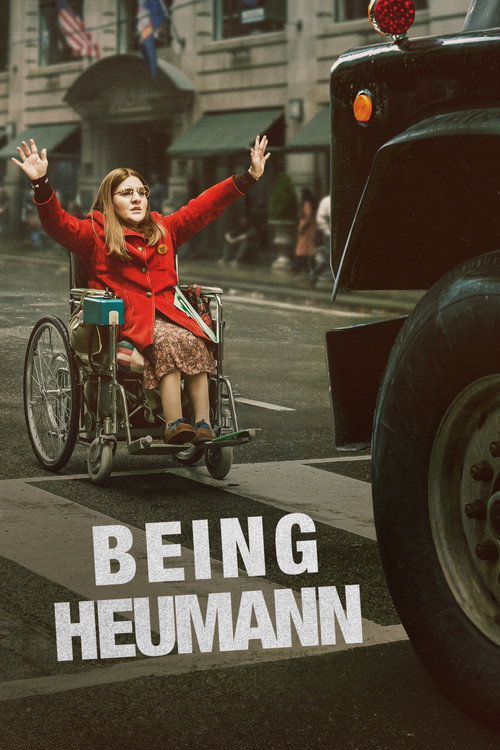
Being Heumann
Narrative tropes
Rebels vs. The Empire
high100+ disabled activists occupy a federal building against the full weight of the U.S. government — police inspections, food cutoffs, and institutional pressure. The activists are portrayed as morally righteous; Califano and HEW are shown as obstructionist and dehumanizing (lacking jail cells for wheelchairs). Victory is achieved when Califano signs the regulations despite the massive power imbalance.
About this trope: A small outmatched group rises up against a massive oppressive regime or institutional power. The rebellion is framed as morally righteous.
Humans Never Give Up
mediumAfter roughly three weeks with food supplies cut and police pressure mounting, 'the collective will of the occupiers holds' — surrender would have been rational. The emotional weight of the film rests on whether the group can endure rather than on the eventual political victory. The activists' refusal to quit despite physical hardship is the story's moral center.
About this trope: Facing impossible odds, humans endure, adapt, and find reasons to keep going. Resilience and refusal to surrender is humanity's defining and most admirable trait.
Cultural messages
Humanity Must Unite
highThe film's ensemble deliberately spans every corner of the disability community — wheelchair users, iron lung users, deaf organizers, a first-time activist. Heumann's central arc is learning she cannot speak for all disabled people and must build genuine coalition. The sit-in requires cross-disability solidarity to hold for 25 days; no single faction could have succeeded alone. The shared threat (unsigned Section 504 regulations) explicitly overrides internal differences.
About this message: A shared external threat forces divided groups to set aside differences and cooperate. Unity across lines of division is both necessary for survival and morally uplifting.
The System Is Rigged
mediumHEW is the institution mandated to protect disabled people's rights under the already-passed Rehabilitation Act, yet Califano willfully withholds the regulations for years. Normal advocacy channels have failed; only an extra-institutional sit-in forces action. The government's response (police inspections, food blockade) confirms the institution is working against the very people it is supposed to serve.
About this message: Institutions meant to protect people — governments, corporations, law enforcement, the justice system — are depicted as corrupt, incompetent, or actively harmful. Heroes must work outside official channels.
Movies that share these tropes






Full plot (spoilers)
Set in 1977, Being Heumann follows Judy Heumann (Ruth Madeley), a Brooklyn-born disability rights activist who uses a wheelchair after contracting polio as a child. Although the Rehabilitation Act of 1973 had already passed, its Section 504 regulations — mandating practical accommodations for disabled people such as wheelchair ramps, curb cuts, and sign-language interpreters — have gone unsigned by HEW Secretary Joseph Califano (Mark Ruffalo). Fed up with years of bureaucratic delay, Heumann rallies more than 100 disabled activists to occupy the San Francisco federal office of Health, Education and Welfare. What begins as a planned protest evolves into a sustained sit-in lasting roughly 25 days. Activists show ingenuity in making the space livable, laying boards over steps for wheelchair access and converting office furniture into sleeping quarters. The government tries to force the protesters out through police inspections and by cutting off food deliveries, but cannot make arrests: authorities lack vehicles large enough for wheelchairs and jail cells capable of holding disabled occupants. Heumann is portrayed as fierce and single-minded, at times abrasive even toward her own allies; early on she withholds escalation plans rather than building consensus. Her central arc involves gradually recognizing that she cannot speak for every disabled person and that the movement demands she balance her determination with genuine collaboration. The ensemble captures the breadth of the disability community: Hale Zukas communicates via a forehead pointer, Ed Roberts — a quadriplegic pioneer reliant on an iron lung — coordinates support from outside the building, Kitty Cone handles behind-the-scenes organization, and Dennis, an eighteen-year-old previously denied school accommodation, represents a younger generation entering the movement. After roughly three weeks, with morale tested by hunger and government pressure, the collective will of the occupiers holds. The sit-in draws national attention and forces Califano's hand; he ultimately signs the Section 504 regulations, marking the first federal civil rights protections for people with disabilities in U.S. history. The film closes by showing how the shared struggle forged lasting community bonds and laid the groundwork for the broader disability rights movement.
Sources: Yahoo Entertainment review, HoloFiles TIFF 2026 review, Web search (multiple critic reviews), Wikipedia (cast and production metadata only)