Movie
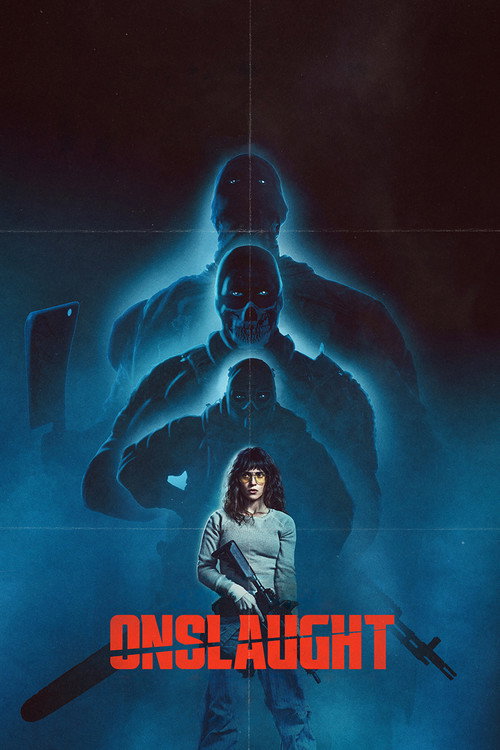
Onslaught
Narrative tropes
Man-Made Monsters
highDr. Kammler is an identifiable scientist-creator running a classified genetic super-soldier program explicitly modeled on MK Ultra. The act of engineering sociopathic killers crosses every natural and ethical boundary (Paperclip-descendant framing implies 'playing God' lineage). The creation gains autonomy the creator cannot control when the soldiers break containment. Kammler's hubris is foregrounded — he and his backers bear 'moral responsibility for the carnage.' All three core conditions and four signals are met.
About this trope: A creator uses science to overstep natural boundaries — creating life, resurrecting the dead, engineering organisms, or fundamentally altering nature — and the creation turns destructive.
One Hero Changes Everything
highCeleste is the singular decisive actor against a threat that government, military, and law enforcement cannot contain — Cyrus (cleanup agent) and Kovacks (bumbling cop) are both insufficient. Her sniper skills and arsenal are the decisive factor. She rallies neighbors, but collective action only succeeds because she leads it. Without Celeste, the trailer park falls.
About this trope: One exceptional individual matters more than institutions or collective action. Problems affecting millions are solved by a single remarkable person. Everyone else is passive.
Violence Gets Results
highThere is no negotiation with genetically engineered sociopathic killers — the entire second half is a sustained siege/combat sequence. Celeste's primary problem-solving skill is her Army sniper training and gun collection. Victory is achieved by 'unleashing overwhelming force.' The resolution is described as 'deliberately swift,' with no narrative interrogation of whether violence was appropriate.
About this trope: The central conflict is ultimately resolved through physical force rather than negotiation, diplomacy, or systemic change. Talking fails; fighting works.
Cultural messages
The System Is Rigged
highThe classified military bunker program — run by a private military contractor with government sanction — is the corrupt institution. The narrative explicitly frames the threat as 'unchecked government and corporate overreach.' Government cleanup agent Cyrus is dispatched but insufficient; Celeste must fight outside any official structure. Authority figures (Kammler, his military-industrial backers) are the villains. Working within the system fails, and resolution comes from a civilian acting entirely on her own.
About this message: Institutions meant to protect people — governments, corporations, law enforcement, the justice system — are depicted as corrupt, incompetent, or actively harmful. Heroes must work outside official channels.
Family Is Everything
mediumCeleste and Daisy are the story's emotional core. Daisy being 'caught in the middle of the violence' is the precise trigger that forces Celeste back into combat mode — protection of family is the direct mechanism of the plot's resolution. Celeste chooses to fight rather than flee for her daughter's sake, and she also rallies neighbors (found-family function). All three core conditions are met.
About this message: Family bonds — biological or found — are ultimately what saves the day, provides meaning, and matters most. Characters who stray from family suffer; those who return are rewarded.
Movies that share these tropes





Full plot (spoilers)
Onslaught is set in a desert trailer park in New Mexico, where Celeste (Adria Arjona), a divorced former Army sniper, has been living a quiet but tightly wound life with her young daughter Daisy (Blake Kennedy). Celeste manages her PTSD through obsessive target practice and an extensive gun collection, and her daily routines are watched with concern by her veteran neighbor Josiah (Reginald VelJohnson) and the local bumbling cop Kovacks (Eric Wareheim). Not far away, inside a classified military bunker, Dr. Hans Kammler (Dan Stevens) — a German scientist explicitly identified as 'third-generation Paperclip,' a descendant of the ex-Nazi researchers brought to the United States under Operation Paperclip — has been running a secret program modeled on MK Ultra to create genetically engineered super soldiers for a private military contractor. Kammler's wife Hanna (Rebecca Hall) serves as his forceful, domineering handler. The three experimental super soldiers, sociopathic killers even before the genetic augmentation began, break out of confinement and immediately begin massacring everyone around them, including a mass-casualty attack at a nearby gas station. A government cleanup agent, Cyrus (Drew Starkey), is dispatched to contain the situation. The super soldiers, including the most physically imposing of the trio — known as The Butcher (Alex Pereira) — make their way toward the trailer park. With her daughter caught in the middle of the violence, Celeste is forced out of her guarded civilian life and back into combat mode. As the attack on the trailer park escalates in a sustained siege sequence with mounting tension, Celeste rallies her neighbors and draws on her full arsenal and sniper skills to fight back against the enhanced soldiers. The film uses a countdown-clock structure — reminiscent of Assault on Precinct 13 — to drive its second half, as Celeste and the survivors push through waves of brutal violence. The narrative frames the super-soldier project as a product of unchecked government and corporate overreach, with the Kammlers and their military-industrial backers bearing moral responsibility for the carnage. The film ends with Celeste having unleashed overwhelming force to protect her daughter, though reviews note the resolution is deliberately swift and somewhat ambiguous.
Sources: Wikipedia, IMDb (search metadata), Letterboxd, Rotten Tomatoes, Moviefone/boxofficehype.com, Inverse review, AwardsWatch review, web search aggregation (Variety, Hollywood Reporter, The Playlist, Gizmodo headlines and excerpts)