Movie
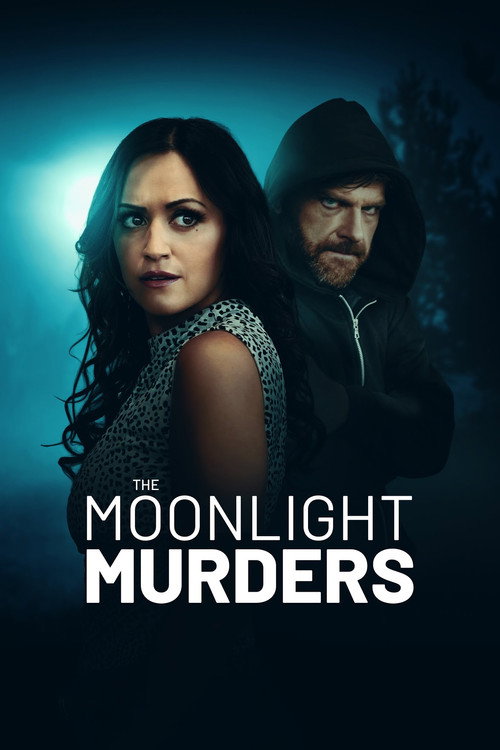
The Moonlight Murders
Narrative tropes
You Can't Trust Anyone
highThe police chief — the most trusted figure in law enforcement, ostensibly investigating the murders — is revealed as the actual serial killer. All three core elements are present: a major betrayal by a trusted authority, a conspiracy hidden within an official body (the chief conducted killings while leading the investigation), and the protagonist discovering she has been endangered by the very institution meant to protect her. Every signal fires: the true enemy hid in plain sight, the institution is compromised at its apex, paranoia is validated (May correctly doubted Zeke's confession but the real threat came from a more trusted direction), and no institutional actor intervenes to save her.
About this trope: Trusted allies, institutions, or authority figures are secretly working against the protagonist. Paranoia is justified because betrayal is real and pervasive.
Violence Gets Results
mediumThe central threat — the serial killer — is ultimately resolved through physical violence: May stabs the police chief, Zeke dies in the struggle, and Poppy arrives with a tire iron. Non-violent approaches all fail: the official investigation never identifies the real killer, and May's attempts to keep Zeke at a distance do nothing to neutralize the threat. The climax is an explicit violent confrontation, victory is achieved by physically overpowering the antagonist, and the story frames the outcome as a success (May's show becomes a ratings hit) without questioning the violent resolution.
About this trope: The central conflict is ultimately resolved through physical force rather than negotiation, diplomacy, or systemic change. Talking fails; fighting works.
Cultural messages
The System Is Rigged
highLaw enforcement — the institution explicitly tasked with stopping the killer — is itself the source of the threat; the police chief IS the serial killer. The official investigation failed to catch the real culprit, instead centering suspicion on Zeke. Working within the system produced no justice: no institutional rescue arrives at the climax. May must stab the chief herself to survive, with true resolution coming entirely outside official channels. Signals: authority figure secretly villainous, conspiracy exposed within an official body, system's failure makes things worse, justice only achieved outside institutional rules.
About this message: Institutions meant to protect people — governments, corporations, law enforcement, the justice system — are depicted as corrupt, incompetent, or actively harmful. Heroes must work outside official channels.
Movies that share these tropes





Full plot (spoilers)
A serial killer is terrorizing the community, leaving victims tattooed with a moon symbol and announcing kills with the phrase 'I am the moon and the light.' Three months after one such murder in a parking lot, rookie security guard Zeke discovers a victim's body on his first week on the job and becomes the primary witness after other suspects are cleared. Investigative reporter May, traveling from Orlando to Tampa with her cameraman Franco, secures an exclusive interview with Zeke for her true-crime show. Zeke quickly develops an intense obsession with May — craving TV fame and her personal attention. When May declines his dinner invitation and is spotted reuniting with her ex-boyfriend Quentin, Zeke's fixation turns violent: he pushes Franco down a staircase and savagely beats Quentin with a baton, leaving him in a coma. Meanwhile, May begins receiving blank notes that only reveal moon drawings under UV light — the same warning signs sent to the killer's victims. Zeke eventually confesses to the serial killings, apparently hoping the notoriety will draw May closer, but May suspects he is fabricating the confession for attention rather than telling the truth. Back in Orlando, May receives one of the mysterious moon letters at her own home. Zeke shows up at her door in a panic begging to be let in, and moments later a second hooded figure appears behind May brandishing a knife. The actual killer is revealed to be the local police chief, whose cancer inexplicably went into remission following each murder and who has been fixated on that perceived connection. Zeke, despite his own dangerous obsession, attempts to protect May and struggles with the chief over the knife. Zeke's neighbor Poppy — who has been in love with Zeke and discovered May's address on his laptop — races to the scene and arrives with a tire iron. In the chaotic confrontation, May stabs the police chief and Zeke is killed. Three months later, May's investigative story becomes a ratings success and she resumes her relationship with Quentin, now recovered; Poppy, meanwhile, finds a new friendship emerging from the ordeal.
Sources: lifetimeuncorked.com, hotchka.com