Movie
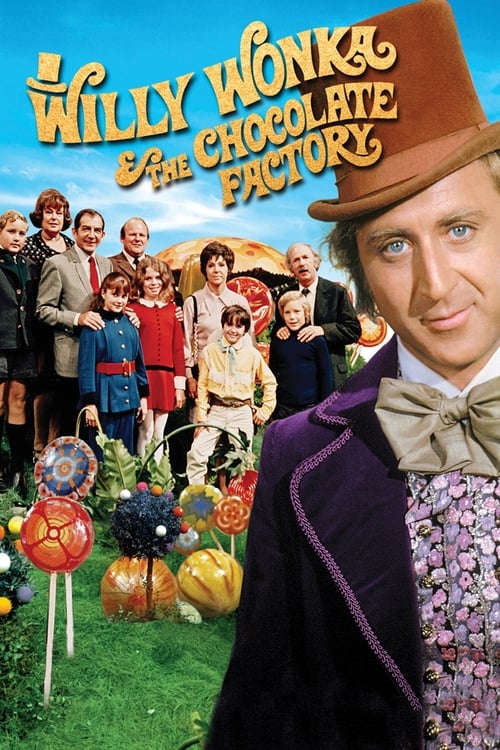
Willy Wonka & the Chocolate Factory
Narrative tropes
Kids See the Truth
highCharlie's childlike moral clarity is his decisive advantage throughout: he alone passes Wonka's hidden loyalty test, while the other children (corrupted by adult-style vices — gluttony, greed, vanity, obsession) fail. Grandpa Joe, the adult companion, reacts with cynical fury and urges revenge when dismissed; Charlie's simple instinct is to return the Gobstopper instead. The Oompa-Loompas' moralizing choruses reinforce that each child's flaw is a failure of adult-coded excess. Innocence functions as a literal superpower: Charlie's lack of corruption is the quality Wonka spent the entire contest searching for.
About this trope: Children possess intuitive wisdom, moral clarity, or a connection to truth that cynical adults have lost. Kids see through lies, sense danger, and understand what really matters.
Cultural messages
Family Is Everything
mediumThe Bucket family's poverty and Charlie's desire to help them frame his entire arc. Grandfather Joe emerges from years of being bedridden specifically to accompany Charlie. The grand prize is not chocolate but the factory itself — Wonka explicitly says Charlie's whole family will move in, turning the resolution into a family-saves-family climax. The emotional payoff is not Charlie's personal triumph but the relief of the family's destitution ending and the bedridden grandparents finally having a home.
About this message: Family bonds — biological or found — are ultimately what saves the day, provides meaning, and matters most. Characters who stray from family suffer; those who return are rewarded.
Forgiveness Sets You Free
highAfter Wonka harshly dismisses Charlie and Grandpa Joe — invoking a contract technicality that feels unjust — Grandpa Joe urges using the Gobstopper as an act of revenge against Wonka. Charlie pauses, then places the Gobstopper on Wonka's desk and turns to leave without a word. This is the story's moral climax: choosing integrity over retaliation, and mercy over grievance. The act immediately liberates Charlie — Wonka is visibly moved, the deception is revealed, and Charlie inherits everything. The story explicitly frames letting go as the harder and nobler path, and the 'villain' (Wonka) is transformed by the mercy shown to him.
About this message: Forgiving — even the unforgivable — is presented as the path to peace and healing. Holding grudges is self-imprisonment; releasing them is liberation.
Movies that share these tropes
Full plot (spoilers)
Charlie Bucket is a twelve-year-old boy from an impoverished family living in the shadow of Willy Wonka's enormous chocolate factory. His bedridden Grandfather Joe recounts how Wonka shuttered the factory years ago after rival confectioners planted spies among his workers, then mysteriously reopened it with an unknown workforce that never leaves or enters through the front gates. Wonka announces a worldwide contest: five Golden Tickets have been hidden inside Wonka chocolate bars, and the finders will receive a guided tour of the factory plus a lifetime supply of chocolate. One by one, four tickets are claimed — by Augustus Gloop, a voracious German boy; Veruca Salt, a pampered and demanding girl whose father buys thousands of bars to find her ticket; Violet Beauregarde, a record-holding gum chewer; and Mike Teevee, a boy obsessed with television. A sinister man named Arthur Slugworth, presented as Wonka's chief rival, approaches each winner and secretly offers a fortune in exchange for a single sample of Wonka's newest creation, the Everlasting Gobstopper. Charlie desperately wants a ticket but his family can barely afford food. When he finds a coin in the street, he buys a Wonka Bar on impulse and discovers the fifth and final Golden Ticket — though a brief wave of excitement is dampened when Slugworth corners him with the same bribe. On the day of the tour, Wonka — a flamboyant, mercurial figure played by Gene Wilder — greets the children and their accompanying adults with theatrical charm and has them sign lengthy contracts before entering. Inside, the factory is a wonderland: a room with an edible landscape, a chocolate river flowing through a meadow of candy flowers, and everywhere the cheerful Oompa-Loompas, small workers imported from Loompaland who serve as both labor force and moralistic chorus. The tour quickly turns into a series of eliminations. Augustus Gloop falls into the chocolate river while drinking from it and is sucked up a pipe. Violet, ignoring Wonka's explicit warning, chews an experimental three-course-meal stick of gum and swells into a giant blueberry. Veruca, coveting a trained squirrel, enters the nut-sorting room against orders and is judged a 'bad nut' by the squirrels, who send her down a garbage chute. Mike Teevee insists on being transmitted by Wonka's television machine and emerges miniaturized. After each mishap, the Oompa-Loompas perform a musical number moralizing on the child's particular flaw. Charlie and Grandpa Joe, who came out of retirement to accompany him, are the only ones left. They sneak a sip of Wonka's Fizzy Lifting Drinks, which cause them to float upward toward a lethal ceiling fan. They escape by belching their way back down, though they believe no one saw them. At the tour's end, Wonka abruptly dismisses Charlie and Grandpa Joe from his office, citing a contract clause they violated by drinking the Fizzy Lifting Drinks, and declares they forfeit the grand prize — a year's supply of chocolate. Grandpa Joe, furious, suggests they give the Gobstopper to Slugworth as revenge. Charlie pauses, then places the Gobstopper gently on Wonka's desk and turns to leave. This act stops Wonka cold. He reveals that 'Slugworth' is actually Mr. Wilkinson, his own employee, and the Gobstopper offer was a secret loyalty test administered to all five children. Charlie alone passed. Wonka tells Charlie he has won the real grand prize: not just chocolate, but the entire factory itself. Charlie and his family will move in; Wonka, having grown old without an heir, chose to find a good-hearted child to inherit his life's work. Charlie and Grandpa Joe ride with Wonka in the Wonkavator — a glass elevator that can travel in any direction — and burst through the factory roof into the sky over the city.
Sources: Wikipedia