Movie
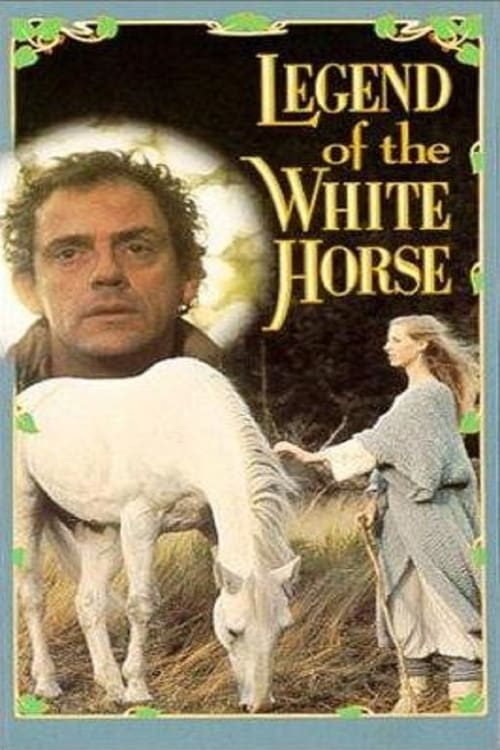
Legend of the White Horse
Narrative tropes
Kids See the Truth
highBlind Jewel forms a genuine protective bond with the magical horse/dragon while every adult around her is compromised — the mining company by greed, Alta by a treasure scheme, Jim by initial corporate compliance. The dragon protects Jewel specifically because of her innocent trust, vindicating her instincts when adult judgment fails. Adults connect with the creature only as something to exploit or destroy; Jewel's innocence reads as wisdom.
About this trope: Children possess intuitive wisdom, moral clarity, or a connection to truth that cynical adults have lost. Kids see through lies, sense danger, and understand what really matters.
Nature Fights Back
mediumThe mining project is the direct driver of the central conflict, and the dragon — explicitly framed as an embodiment of the natural world — transforms defensively when threatened. Jim's refusal to falsify the environmental report is the plot's moral hinge, explicitly connecting corporate exploitation to harm against the natural world. Nature (the dragon) behaves with intentionality against the humans who threaten it.
About this trope: Humanity's exploitation or destruction of the environment triggers catastrophic consequences — nature retaliates through disasters, plagues, animal attacks, or ecological collapse, as if the planet itself is punishing human arrogance.
Cultural messages
The System Is Rigged
highJim is dispatched to rubber-stamp a corrupt mining operation — the institution of environmental assessment is corrupt by design. When he refuses to falsify his report, his employer sends assassins, the organization actively turning against its own agent. All five signals fire: villainous authority figures, an institutional cover-up (the fake report), the hero opposed by his own organization, working within the system being impossible, and justice requiring action entirely outside institutional channels.
About this message: Institutions meant to protect people — governments, corporations, law enforcement, the justice system — are depicted as corrupt, incompetent, or actively harmful. Heroes must work outside official channels.
Nature Knows Best
mediumThe dragon and its woodland setting are presented as magical and morally pure against both Soviet-style bureaucracy and American corporate greed. Jim's moral transformation is triggered by witnessing industrial exploitation firsthand — connecting with natural reality over corporate mandate. Modern institutional life (both Cold War poles) is satirized as corrupt, while the dragon and Jewel's bond represent spiritual truth the adult world has forfeited.
About this message: The natural world, indigenous peoples, or pre-industrial life is portrayed as inherently wise, pure, morally superior, or spiritually richer than modern civilization. Nature is a source of truth that technology has replaced.
Movies that share these tropes

Full plot (spoilers)
Set in the fictional Central European nation of Karistan, the story follows Jim Martin, an American corporate surveyor dispatched by a mining company ostensibly to assess whether a planned mineral extraction project will harm the local environment — though in practice he is expected to rubber-stamp the operation. He lodges with Alta, a local woman widely regarded as a witch, who lives with her young blind daughter Jewel. Jim's son Steve accompanies him and befriends Jewel. Jewel has formed a deep bond with a mysterious white horse that roams the nearby woodlands; the horse is in fact a magical creature capable of transforming into a dragon to protect her when she is threatened. When Jim witnesses the reality of what the mining project would do to the region, he refuses to submit the falsified environmental report his employer demands. In retaliation, the company sends assassins to eliminate him. Complicating matters further, Alta and a local bandit named Tai Ching scheme to murder the dragon themselves so they can plunder its legendary hoard of treasure. The film uses this adventure framework as a Cold War satire, contrasting Soviet-style Red bureaucracy with American corporate greed, while the dragon — caught between the two threats — embodies the natural world and the innocent caught in the crossfire of ideological and economic conflict.
Sources: Wikipedia, Moria Reviews