Movie
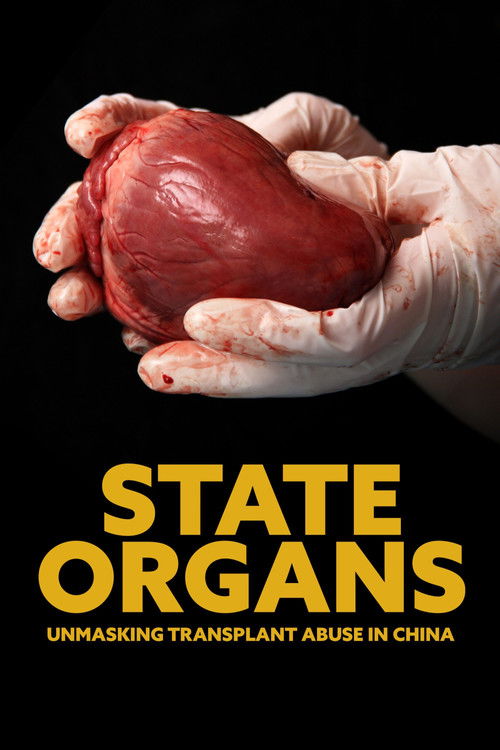
State Organs: Unmasking Transplant Abuse in China
Narrative tropes
You Can't Trust Anyone
highThe deepest betrayal is that the medical establishment — nominally healers — is the machinery of harm. Anonymous witnesses (police officer, nursing student, military doctor) must hide their identities, validating pervasive paranoia. Families encounter a uniform wall of institutional silence. Trust is systemically betrayed by hospitals, prisons, and government bodies, with the true perpetrators hiding inside ostensibly legitimate structures.
About this trope: Trusted allies, institutions, or authority figures are secretly working against the protagonist. Paranoia is justified because betrayal is real and pervasive.
Rebels vs. The Empire
highFalun Gong practitioners — over 100 million strong yet entirely outmatched by the CCP state apparatus — are framed as brave moral resisters. The regime is depicted as cruel and dehumanizing (torture, disappearances, live organ extraction). Individual practitioners risk and lose everything to broadcast information or testify. The film closes on grassroots spiritual resistance as a meaningful if incomplete challenge to state power.
About this trope: A small outmatched group rises up against a massive oppressive regime or institutional power. The rebellion is framed as morally righteous.
Big Brother Is Watching
mediumThe CCP's monitoring apparatus tracks Falun Gong practitioners pervasively; Yun Zhang is placed under surveillance and threatened before vanishing. Shawn Huang's defining act is infiltrating a television station specifically to bypass state information control. The documentary's entire project — cold calls, anonymous testimony, smuggled accounts — is an effort to confront and expose the surveillance-and-suppression system.
About this trope: Surveillance technology is used by those in power to control, manipulate, or oppress people. The story presents a tension between security and freedom, concluding that surveillance is more dangerous than the threats it claims to prevent.
Humans Never Give Up
mediumThe two families' two-decade searches — the father visiting provincial prisons repeatedly, always turned away; Dr. Will Huang pursuing his brother's case against a complete wall of silence — are framed as the film's moral backbone. Neither family locates their missing relative, yet the refusal to stop searching, despite rational hopelessness, is what gives the documentary its urgency and moral weight.
About this trope: Facing impossible odds, humans endure, adapt, and find reasons to keep going. Resilience and refusal to surrender is humanity's defining and most admirable trait.
Cultural messages
The System Is Rigged
highEvery institution meant to provide accountability — government offices, provincial prisons, hospitals — is revealed as complicit or actively obstructive. The father spent 20 years being turned away from prisons without explanation. Medical professionals were desensitized and participating in harvesting. Working within the system consistently fails; the documentary itself functions as justice from entirely outside official channels.
About this message: Institutions meant to protect people — governments, corporations, law enforcement, the justice system — are depicted as corrupt, incompetent, or actively harmful. Heroes must work outside official channels.
Movies that share these tropes




Full plot (spoilers)
State Organs: Unmasking Transplant Abuse in China is a 76-minute documentary directed by Peabody Award-winning filmmaker Raymond Zhang, released in 2024. The film structures its investigation around two parallel missing-persons cases that serve as emotional entry points into a broader exposé of alleged state-sanctioned forced organ harvesting in China.
The first story centers on Yun Zhang, a Falun Gong practitioner whose husband was arrested for protesting the Chinese Communist Party's 1999 crackdown on the movement and died from torture in detention. After his death, Yun began writing appeal letters to government offices. She was placed under police surveillance and threatened, and in February 2002 she disappeared entirely. Her sister, Michelle Zhang, became a Falun Gong practitioner herself following her sister's disappearance and serves as one of the film's primary on-camera narrators. Michelle recounts rumors and potential sightings placing Yun in detention in Qingdao City, while their father spent two decades visiting provincial prisons seeking answers, each time blocked or turned away by authorities without explanation.
The second story follows the disappearance of Shawn Huang, who in April 2003 attempted to broadcast information about the Falun Gong persecution by infiltrating a local television station. He vanished without trace after the attempt. His brother, Dr. Will Huang, provides testimony about the two-decade search for Shawn and the wall of silence encountered at every turn.
Beyond the two families, the documentary builds an evidentiary case. The filmmakers conduct cold calls to Chinese hospitals inquiring about organ transplant availability, finding wait times of one to two weeks — compared to two to three years in the United States — a disparity they present as evidence of an on-demand supply. Statistical data shows Chinese transplant procedures jumped dramatically from 78 operations between 1991 and 1998 to 14,085 between 1999 and 2006, the period that immediately follows the state's suppression of Falun Gong, which by 1999 had attracted over 100 million practitioners and was perceived by CCP leader Jiang Zemin as a political threat.
Witness testimony includes an anonymous police officer who describes the organ extraction process, a former nursing student who corroborates accounts and discusses how medical professionals were gradually desensitized to the procedures, and Cheng Peiming, described as the first known survivor of forced organ harvesting, who recounts having portions of his liver and lung removed while still alive and imprisoned for practicing Falun Gong. A military doctor referred to as George, who describes being present at an organ extraction, is cited as the first such professional willing to testify publicly; his account was part of the director's original motivation for making the film.
The documentary contextualizes these events by comparing the scale of the alleged atrocity to the Holocaust, noting the difference is that it is ongoing. The film closes on a note of cautious hope, noting a grassroots renewal of traditional faith within China as a form of spiritual and civil resistance. The two families at the center of the film never locate their missing relatives, but their decades-long search frames the documentary's moral urgency.
Sources: stateorgans.com, The Epoch Times, California Insider